Your car won’t start. You turn the key, hear a clicking sound, or do nothing at all. Before you assume the worst and start thinking about expensive repairs, you need to understand what’s actually happening under the hood.
A car that won’t start is frustrating, but it doesn’t always mean your battery is dead or your alternator has failed. The problem could be a simple loose connection, a corroded terminal, a parasitic electrical drain, or a charging system fault. And that’s why proper diagnosis matters before any repair work begins.
This guide explains what causes battery and electrical startup problems in Sharjah’s climate, what signs to look for, what you can check yourself, and when professional inspection becomes necessary. By the end, you’ll understand whether your car needs battery repair, replacement, or something else entirely.
If you’re in Sharjah and your car’s battery or electrical system needs attention, we’re here to help with honest diagnosis and transparent service.
Car Battery Repair in Sharjah: What Our Workshop Checks and Fixes
When you bring your car to us for battery issues, we don’t just assume the battery is the problem. A proper inspection covers several systems because the same symptom—a car that won’t start—can come from different causes. Whether it’s a battery problem, an alternator fault, or a starter issue, we provide complete car repair services in Sharjah with proper diagnosis before any work begins.
Here’s what we typically check:
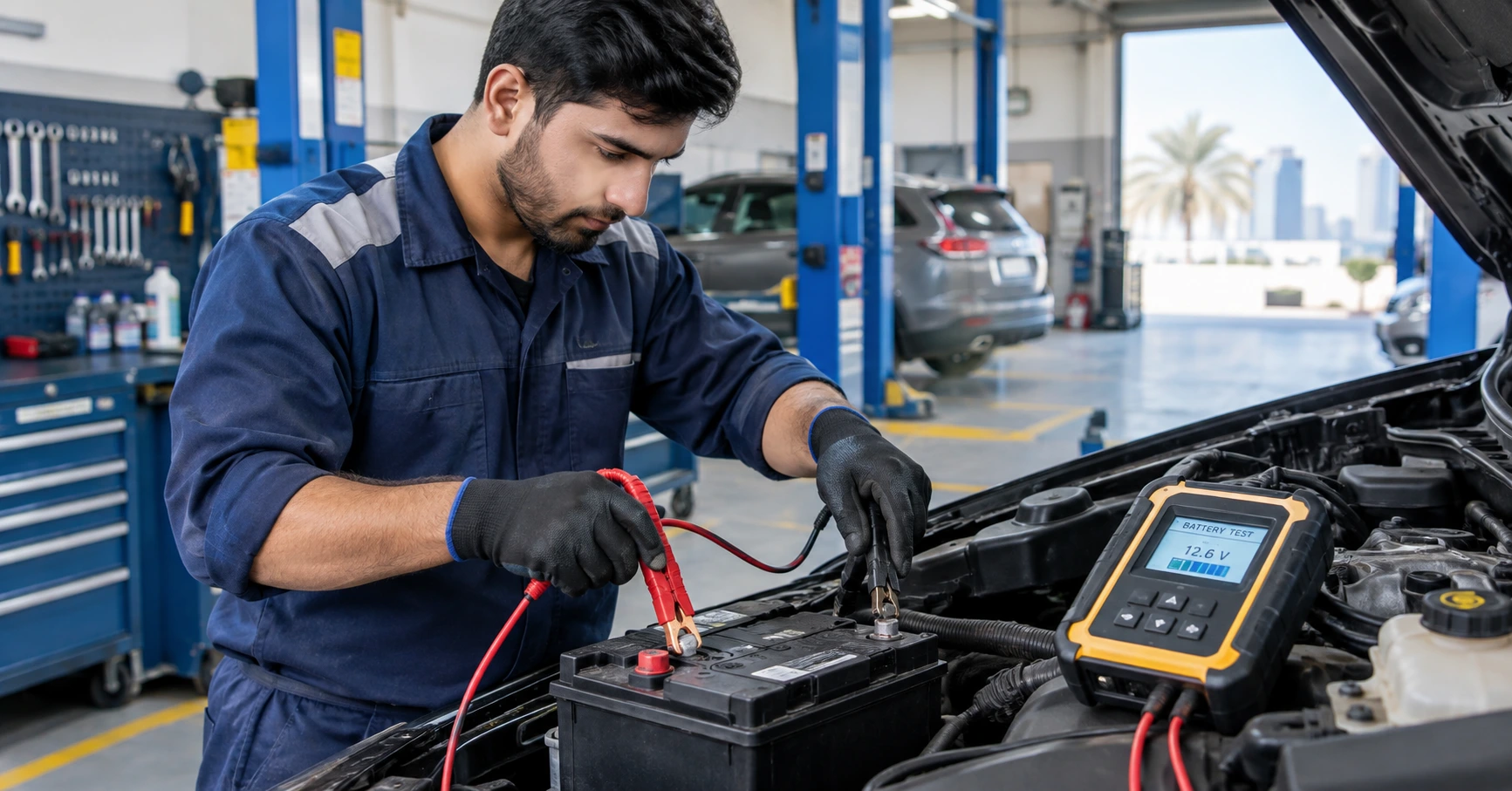
Car Battery Testing and Voltage Check
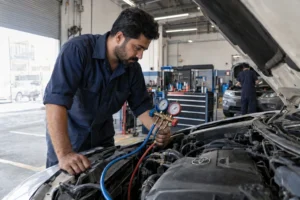
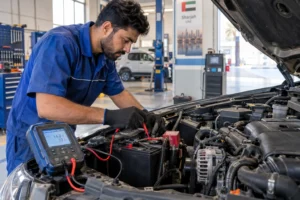
A healthy car battery should hold a voltage of around 12.6 volts when the engine is off. If the voltage drops below 12 volts, the battery is losing charge. We use a battery load tester to check not only the voltage but also how well the battery holds a charge under load—this tells us if the battery can still do its job.
A battery that reads low voltage might be:
- Genuinely worn out and ready for replacement
- Drained by a parasitic electrical draw
- Suffering from a bad alternator that isn’t recharging it
- Simply cold (battery performance drops in cooler mornings, though Sharjah’s heat is more often the issue)
Testing takes just a few minutes, but the information it gives us prevents unnecessary part replacement.
Charging System and Alternator Check
The alternator is responsible for recharging your battery while the engine runs. If the alternator isn’t working, the battery will drain no matter how new it is.
We check the alternator by:
- Measuring the charging voltage while the engine is running (should be 13.5–14.5 volts)
- Testing the alternator output under load
- Checking the serpentine belt that drives it
- Inspecting the electrical connections
A weak alternator output is one of the most common reasons cars experience battery problems, and many drivers blame the battery when the real fault is the charging system.
Battery Terminal Cleaning and Connection Repair
Corroded battery terminals and loose connections create resistance that can prevent the battery from delivering its full power. Corrosion is especially common in hot, humid climates like Sharjah’s.
We clean corroded terminals, tighten loose cable connections, and check for damaged wiring. Sometimes this simple step is enough to restore reliable starting.
Finding Battery Drain and Electrical Faults
A parasitic electrical drain happens when something in your car’s electrical system is consuming power even when the engine is off. This might be a faulty alternator diode, a stuck relay, a short in the wiring, or even an aftermarket accessory left connected.
If your battery drains overnight or over a few days of sitting, we trace where the power is going and identify the fault before it drains your new battery too.
Battery Replacement When Repair Is Not Possible
Some battery problems can’t be fixed. Internal cell failure, a swollen or damaged battery case, or age-related degradation means the battery must be replaced. When we recommend replacement, we explain why the battery can’t be repaired and what to expect from a new one.
Signs Your Car Battery Needs Professional Attention in Sharjah
Not every battery or electrical problem shows up the same way. Here are the signs that typically mean your car needs a professional check:
Car Won’t Start or Only Clicks
The most obvious sign. Either the engine won’t turn over at all, or you hear a rapid clicking when you turn the key. A clicking sound usually indicates low battery voltage, but it can also mean a starter motor problem or a bad battery cable connection.
Engine Cranks Slowly in the Morning
Your engine turns over, but sluggishly. The battery has enough power to start the car, but it’s struggling. In Sharjah’s summer heat, this often means the battery is nearing the end of its life or the charging system isn’t fully recharging it overnight.
Dim Headlights and Flickering Dashboard
When you turn on the headlights, they’re noticeably dimmer than usual, or they flicker when you’re at a traffic light with the air conditioning running. This indicates the battery isn’t supplying steady voltage. It could be the battery itself, a loose connection, or an alternator that’s not keeping up with electrical demand.
Battery Warning Light or Check Engine Light
A battery symbol on your dashboard usually means the charging system isn’t working properly. The alternator may be failing, the battery connections may be loose, or there’s a fault in the charging circuit. Don’t ignore this light—the battery will eventually drain completely.
Corroded Terminals or a Swollen Battery Case
Open the hood and look at the battery terminals. White, blue, or green crusty buildup is corrosion. It reduces the connection between the battery and the cables. A swollen or bulging battery case means the internal chemistry is breaking down—replacement is needed.
Battery Age: When Is It Time for a Check?
Most car batteries last 3 to 5 years in normal climates. In Sharjah’s extreme heat, many batteries don’t last as long. If your battery is over 3 years old and you’re experiencing any of the above signs, professional testing is a good idea. Heat accelerates the chemical breakdown inside the battery.
Is it the battery, alternator, or starter motor? How We Find the Real Fault
This is where proper diagnosis saves you money and frustration. I’ve seen drivers replace a perfectly good battery only to discover the real problem was the alternator, or replace the alternator when the starter was actually failing.
The same symptom—a car that won’t start—can come from three completely different sources. Here’s how we separate them:
Why a Car That Won’t Start Is Not Always a Battery Problem
Your car’s electrical system has three main components involved in starting:
- The battery supplies the initial electrical power
- The alternator recharges the battery while driving
- The starter motor—turns the engine over when you press the start button
If any one of these fails, your car may not start. A thorough check identifies which one is at fault.
Step 1: Battery Voltage and Health Test
We measure the battery voltage with the engine off (should be 12.6 volts or higher) and then perform a load test to see how much current the battery can deliver. A weak voltage or low load test result points to the battery. A normal voltage test, but a car that still won’t start points elsewhere.
Step 2: Charging System and Alternator Output Check
With the engine running, we measure the voltage at the battery. It should rise to 13.5–14.5 volts as the alternator charges. If it stays at 12.6 volts or drops below it, the alternator isn’t doing its job.
We also check the alternator’s actual output with a meter. A failing alternator produces less current than it should, which means the battery drains during driving instead of getting recharged.
Step 3: Starter Motor and Wiring Inspection
If the battery and alternator test normal, we listen to what happens when you turn the key. A grinding noise, a clicking sound, or a complete absence of sound can all point to a starter motor problem.
We also inspect the battery cables, ground connections, and wiring for damage, corrosion, or loose connections that prevent power from reaching the starter.
Step 4: Computer Diagnostics for Warning Lights
Modern cars have onboard computer systems that detect electrical and battery faults. We pull the diagnostic codes to see what the car’s computer has logged. A code might point to a charging system fault, a battery problem, or an electrical circuit issue that isn’t obvious from a basic inspection.
Understanding what these diagnostic codes mean can help you communicate the problem more clearly to your technician. Resources like the OBD-II diagnostic code database provide detailed explanations of common vehicle fault codes, which can give you insight into what your car’s computer has detected before you bring it in for service.
What Types of Car Battery Problems Can Be Repaired?
Not every battery issue requires a new battery. Understanding what can and can’t be fixed helps you make an informed decision.
Problems We Can Usually Fix
Corroded or loose battery terminals—Cleaning the corrosion and tightening the connections restores the electrical path from the battery to your car’s systems.
Poor or damaged cable connections—A frayed, broken, or disconnected battery cable prevents the battery from delivering power. Repairing or replacing the cable fixes the problem.
Charging system faults—If the alternator isn’t charging properly, fixing the alternator or the charging circuit restores the battery’s ability to recharge.
Parasitic electrical drain—Identifying and fixing the source of unwanted power drain (a stuck relay, a faulty diode in the alternator, or a short in the wiring) stops the battery from losing charge when the car sits.
Low charge due to infrequent driving or short trips—A battery that hasn’t been fully charged in weeks can often be restored to normal by allowing the car to run long enough for the alternator to fully recharge it.
Problems That Usually Need a New Battery
Internal cell failure—The battery’s internal chemistry breaks down, and it won’t hold a charge. Testing will confirm this. A new battery is the only solution.
Swollen or physically damaged battery case—A swollen battery indicates internal gas buildup from a failed cell. The battery is no longer safe and must be replaced.
Very low or zero voltage – If a battery measures 0 volts or close to it, it’s typically dead beyond recovery. A new battery is needed.
Age-related failure in Sharjah’s heat – Extreme heat accelerates battery degradation. A battery that’s 4+ years old in this climate is often better replaced than repaired, even if testing shows it still works.
How We Decide and Explain It to You in Simple Words
Here’s the honest approach: we test first, then explain the result in terms you understand. If we find a battery terminal problem, we’ll show you the corrosion and explain that cleaning it will fix it.
If the battery is genuinely at the end of its life, we’ll tell you that a replacement makes more sense than a temporary repair. And if the problem is actually the alternator or starter, we’ll explain that replacing the battery won’t help—fixing the real fault will.
You’ll know what the problem is and why we’re recommending a particular solution before any work begins.
Car Battery Repair or Replacement: Which One Does Your Car Need?
This is often the question drivers ask, and the answer depends on what testing reveals.
When Repair Makes Sense
Repair is the right choice when:
- The battery itself is fine, but terminals are corroded or cables are loose
- The alternator has stopped charging, but the battery is still good
- A parasitic drain is emptying the battery, but the battery can hold a charge when it’s not being drained
- The battery is simply discharged and needs recharging, not replacement
In these cases, fixing the actual problem (not the battery) restores normal operation and saves you money.
When Replacement Is the Safer Choice
Replacement is necessary when:
- Internal battery testing shows the battery can’t hold a charge properly
- The battery is 4+ years old in Sharjah’s heat and showing weakness
- The battery case is damaged or swollen
- The battery voltage is zero or extremely low and won’t recover
A battery that’s failing will eventually leave you stranded. Replacing it before complete failure prevents roadside emergencies.
Why a Jump Start Alone Does Not Solve the Problem
A jump start can get you going immediately, and it’s a useful emergency solution. But a jump start is temporary. It doesn’t fix the underlying problem.
If you need a jump start because your battery is weak or your alternator isn’t charging, the problem will happen again next time you drive. Getting the car diagnosed identifies whether you need repair (fixing the charging system) or replacement (if the battery is genuinely worn out).
How Our Car Battery Repair Process Works
When you bring your car to us, here’s exactly what happens:
Step 1: Contact Us by Call, WhatsApp or Form
You reach out to describe the problem. Our team answers questions and schedules a time for inspection. You can call us at +971 52 207 4594 or use our contact form to request pickup or arrange a workshop visit.
Step 2: Inspection and Diagnosis
We perform a complete electrical and battery system check. This includes battery testing, alternator output measurement, starter inspection, and wiring checks. We also read any diagnostic codes from the car’s computer.
The inspection takes about 30–45 minutes. Once we’ve identified the problem, we explain it to you clearly.
Step 3: Clear Quote Before Any Work Starts
Before we touch anything, we give you a written quote showing exactly what needs to be done, what parts or labor are involved, and the total cost. You decide whether to proceed, get a second opinion, or try something else. No surprises.
Step 4: Quality Check and Delivery
Once you approve, we complete the repair or replacement. When finished, we test the system again to confirm it’s working properly. You get your car back in reliable condition.
Car Battery Repair Cost in Sharjah: What Affects the Price
One question we hear often: How much does car battery testing cost in Sharjah?
The cost depends on several factors. We explain them upfront so you understand what affects the quote.
What Changes the Cost
Type of fault – A simple terminal cleaning costs less than replacing a failed alternator, which costs less than replacing the battery itself.
Labour time – Diagnosing a parasitic drain takes longer than testing a battery. The more complex the diagnosis, the more time involved.
Parts needed – If only the battery needs replacement, that’s one cost. If the alternator or starter is involved, the parts cost increases.
Car make and model – Some vehicles have simpler battery and charging systems; others are more complex. A luxury or newer model may involve more time to diagnose or more expensive parts.
Why We Quote Before Starting Work
We don’t start work without your approval. A clear quote tells you exactly what you’re paying for and why. This prevents the frustration of discovering hidden costs later.
Testing and Diagnosis: What Is Included
Our battery testing and electrical diagnostic checks include:
- Battery voltage and load test
- Alternator output measurement
- Starter function assessment
- Wiring and connection inspection
- Computer diagnostic scan
- Explanation of findings
You’ll know what’s wrong before deciding on repair or replacement.
How to Get a Free Quote Today
Contact us at +971 52 207 4594 or fill out our contact form to request an inspection. Tell us what you’re experiencing (car won’t start, slow crank, dim lights, etc.), and we’ll schedule a time that works for you.
Car Won’t Start? Request Pickup or Visit Our Workshop
We understand that your car may not start at all, making it difficult to drive to a repair shop. That’s why we offer flexible service options.
How Pickup Works
If your car won’t start and you need help, contact us to request pickup. Our team will discuss your situation and arrange to collect the vehicle from your location in Sharjah. We’ll perform the inspection at our workshop and contact you with findings and a quote.
Visiting Our Workshop in Al Qassim, Industrial Area 4
Alternatively, if your car does start (even if it’s reluctant), you can drive to our workshop in Al Qassim, Industrial Area 4, Sharjah. You’ll have direct access to our team, can discuss the problem face-to-face, and get immediate feedback during testing.
We’re conveniently located and equipped for complete electrical and battery system diagnostics.
Why Car Batteries Fail Faster in Sharjah’s Heat
Sharjah’s climate is tough on car batteries. Understanding why helps you protect yours and know when professional attention is needed.
How Summer Heat Shortens Battery Life
A car battery works through a chemical reaction inside. Heat accelerates that reaction, which means the battery degrades faster.
In Sharjah’s summer temperatures—often exceeding 45°C—battery life is shortened significantly. A battery that might last 5 years in a cooler climate often lasts only 3 years here.
The heat also increases the electrical demand on your battery because:
- Air conditioning runs constantly and uses more electrical power
- Engine cooling fans run more often
- The alternator works harder to keep up with demand
This means your battery is working harder and degrading faster at the same time.
Simple Habits That Help Your Battery Last Longer
While you can’t control Sharjah’s heat, you can help your battery survive it by maintaining proper electrical system health. Regular auto car maintenance in Sharjah includes battery testing, terminal cleaning, and alternator checks that keep your electrical system reliable year-round.
- Park in shade when possible – Even a few degrees cooler under cover helps.
- Keep the battery terminals clean – Corrosion builds up faster in heat and humidity.
- Don’t leave the car sitting for weeks – A battery that isn’t being charged periodically will weaken.
- Run the engine regularly – If your car sits for extended periods, start it up and run it for 15–20 minutes weekly to keep the battery charged.
- Have the alternator checked – If it’s not fully charging the battery, the battery will die faster even if it’s new.
When to Get Your Battery Checked Before Summer
If you’re heading into Sharjah’s peak summer months (May through September) and your battery is 2+ years old, a professional check is smart. Testing before the heat peaks can prevent a breakdown in 50°C+ weather.
We Repair Battery and Electrical Faults on All Car Makes
Whether you drive a Japanese sedan, a Korean compact, a European luxury car, or a truck, battery and electrical systems work the same way. We diagnose and repair battery, alternator, and starter issues across all makes and models.
Japanese and Korean Cars
Toyota, Nissan, Honda, Hyundai, and Kia vehicles are common on Sharjah’s roads. We’re familiar with their battery systems, electrical layouts, and common faults.
European and Luxury Cars
BMW, Mercedes-Benz, Audi, and similar vehicles often have more complex electrical systems with onboard computers. We have the diagnostic equipment and expertise to work on them.
Why Sharjah Drivers Choose Jawharat Al Sahil for Battery and Electrical Repair
When you choose where to get your car’s battery and electrical system checked, you want to know you’re making the right decision.
Diagnose First, Repair Right
We test before we recommend. You won’t be sold an unnecessary battery if the real problem is the alternator. You won’t be convinced to replace parts without proof of what’s wrong.
Experienced Technicians with Proper Diagnostic Tools
Our team uses professional-grade battery testers, alternator analyzers, and computer diagnostic equipment. These tools give us accurate information about what’s actually happening in your car’s electrical system.
Complete Car Care Under One Roof
Beyond battery and electrical repair, we handle air conditioning service, engine repair, suspension work, and body repairs. If your car needs comprehensive attention, you can manage it all in one place.
Frequently Asked Questions About Car Battery Repair in Sharjah
Where can I get my car battery checked in Sharjah?
You can bring your car to Jawharat Al Sahil Auto Maintenance in Al Qassim, Industrial Area 4. We perform complete battery testing including voltage checks, load tests, and alternator output measurement. If your car won’t start, you can also request a pickup service.
How do I know if my car battery needs repair or replacement?
That’s what testing determines. A battery that shows weak voltage, fails a load test, or has internal cell damage needs replacement. A battery that tests fine but isn’t charging properly may just need the alternator fixed. Professional testing removes the guesswork.
What types of car battery problems are repairable?
Corroded terminals, loose connections, charging system faults, and parasitic electrical drains are usually repairable. Battery internal failure, extreme age in Sharjah’s heat, and physical damage typically require replacement.
How long does a typical car battery repair take?
Diagnosis usually takes 30–45 minutes. A simple repair like terminal cleaning takes under an hour. Alternator replacement or a more complex electrical fault may take 2–3 hours depending on the vehicle.
How much does car battery repair cost in Sharjah?
Cost depends on the fault, parts needed, and labour time. A battery test and quote cost nothing—we provide that before any work begins. Repair or replacement costs vary, but we explain them clearly upfront.
Get Your Car Battery Checked in Sharjah Today
Your car’s battery and electrical system are too important to guess about. A car that won’t start, cranks slowly, or shows electrical warning signs needs professional diagnosis—not assumptions.
At Jawharat Al Sahil Auto Maintenance in Al Qassim, Industrial Area 4, we test thoroughly, explain clearly, and quote before we work. Whether your car needs a simple terminal cleaning, alternator repair, or battery replacement, we’ll identify the real problem and fix it right.
Don’t let a battery issue leave you stranded. Contact us today at +971 52 207 4594 or use our contact form to request an inspection. We’ll diagnose the fault, provide a clear quote, and get your car reliable again.